
Healthy Buildings
Design based around humans...
I’m a firm believer that HEALTHY SPACES MAKE HAPPY PEOPLE.
I have studied to become a FitWel® Ambassador - promoting human-centric design. FitWel® and WELL are part of the healthy building movement and are building standards which advance human health and wellness in buildings and communities. In other words – it’s a new approach to healthy building design which makes the building work for it’s users rather than the other way around. Both standards cover air and water quality, nourishment, healthy lighting and daylight, fitness, mind and comfort. The standards are science-based and evidence-based and have proven to greatly improve the user experience, resulting in happier, more engaged and productive people.
I have also recently completed the Materials and Human Health PCID 0601 at Parsons New School, New York - part of the Healthier Materials and Sustainable Building Certificate.
This means looking at....
- Materials
- Air quality
- Water quality
- Access to nature
- Nourishment
- Healthy lighting design
- Movement
- Mental health
- Comfort
- Community
- Innovation
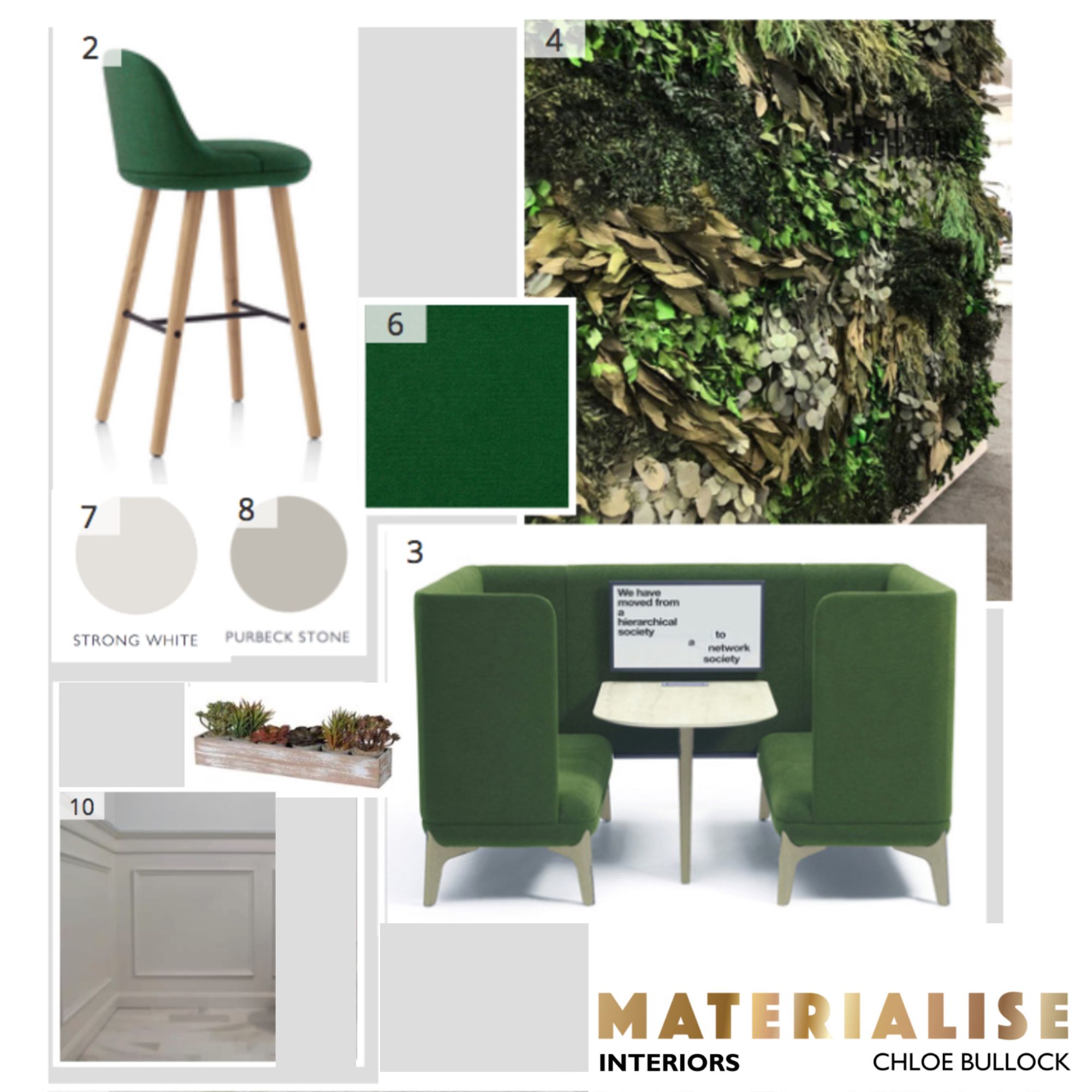
Some of the healthy specifications that can be used....
- Colour changing circadian lighting to tune the body into the day and aid restful sleep
- Good air quality - filtering and avoiding off-gassing & toxic materials, finishes, furniture
- Good water quality
- Access to nature - biophilic benefits of having natural materials, plants and even imagery using plants inside our homes is great for mental heath, healing, and even air purifying.
Supporting qualifications
Regenerative Design
Qualification: Living Future Accredited Professional (LFA)
Organisation: International Living Future Institute (ILFI)
Date: April '23
"Socially just, culturally rich, and ecologically restorative" - International Living Future Institute
LFA is a professional accreditation that recognises proficiency in the world’s most ambitious, advanced, and holistic regenerative design standards.
Administered by the International Living Future Institute (ILFI) their accreditation LFA and their certification for buildings the Living Building Challenge®, are based on a framework of categories, based on the symbol of a seven-petaled flower, that help guide the design of buildings that do more good than harm and demonstrate "what good looks like".
Used with ILFI's wide span of tools to use to certify products, projects and communities - the PETAL CONCEPTS cover:
Place
Water
Energy
Materials
Health
Beauty
Equity
>>Read more here
Healthy Buildings
Qualification: Healthy Materials Advocate - Healthier Materials and Sustainable Building Certificate, Art & Design with Parsons certificate program
Organisation: Parsons New School, New York
Date: May '21
This course explored material health, sustainability and circular design strategies with in the Built Environment. Examined from the human health perspective - getting into chemistry and impacts on body systems.
Sections:
1. Healthier Materials & Sustainable Building PCID 0605 X1
2. Materials and Human Health - PCID 0601 Xk1
3. Building Products and Chemistry - PCID 0602 X1
4. Healthier Material Design & Specification - PCID 0603 X1
5. Executing a Healthier Project - PCID 0604 X1
Qualification: FitWel® Ambassador
Organisation: Center for Active Design became the exclusive operator of Fitwel. Originally developed by the US Centers for Disease Control and Prevention (CDC) + the General Services Administration (GSA), in 2016
Date: February '19
A healthy building certification system that focuses on improving the lives of occupants and local communities.
Also studied WELL Building Standard - took intensive course - but didn't take exam. Date: April '19
Circular Economy
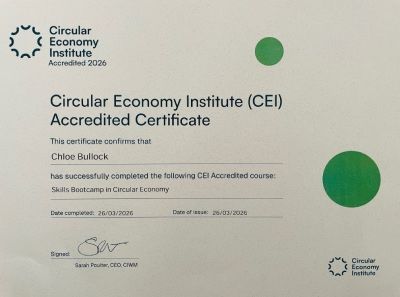
Course: Skills Bootcamp in Circular Economy
Qualification: Circular Economy Institute accredited - Trained level
Organisation: Circular Economy Institute + Department for Education. Course run by Brighton & Hove City Council + SOENECS. Hosted by Plus X Innovation.
Date: March '26
Membership: Circular Economy Institute Trained member
Classroom: history, theory, case studies, group analysis. Lectures from Claire Potter, Sussex University
Site visits: Waste House/Wild House, circular cities: Brighton and London, Ford MERF (materials recovery facility)
Lifecycle assessment training
Individual Circular Economy Opportunity Assessment (CEO) presentation
Formulate a post study Action Plan
Vegan Design
Qualification: Vegan Design Certified™ (IDCEC accredited)
Organisation: Vegan Design Org
Date: July '17
Membership: International Vegan Design Association founding member
The course - supported by PETA investigations - covered the widespread use of animals in the interior design supply chains - as well as the methodologies used for material 'production'. It also examined the use of toxic chemicals and their impacts to workers and the vulnerable communities surrounding production.
I was the first interior designer in the UK to be VEGANDESIGN.ORG CERTIFIED™ (IDCEC accredited).
>>Read more here
Useful RESOURCES for designers and students....